
You will receive the whitepaper within 10 minutes in your mailbox.
While waiting...
We invite you to visit our YouTube channel here.
Didn't receive anything?
Please send us an email and one of our team members will send it through to you.
Oops! Something went wrong while submitting the form.
Installation
Modification
Maintenance
Service - Offshore Safe Lifting Insights from the Stones FPSO
-1.avif)
Welcome to the 2026 API Offshore Safe Lifting Conference.
We are pleased to share the story behind one of the most challenging offshore lifting operations successfully executed in recent years: the replacement of a main hydraulic jack on Shell's Stones Turritella FPSO. This project demonstrates how careful engineering, cross-disciplinary collaboration, and innovative lifting solutions can overcome complex challenges in highly constrained offshore environments.
Meet the Speaker
William Clay Kirby, PE brings more than 19 years of experience as both a project design engineer and operational support engineer. He holds a Bachelor's degree in Mechanical Engineering from Tulane University and a Master's degree in Naval Architecture and Marine Engineering from the University of New Orleans. Clay is a registered Professional Engineer in Louisiana and an active member of both the Society of Naval Architects and Marine Engineers (SNAME) and the American Society of Civil Engineers (ASCE).
Drawing on his direct involvement in the project, Clay will share valuable insights into the planning, execution, and lessons learned from this first-of-its-kind offshore heavy lifting operation.
Project Overview
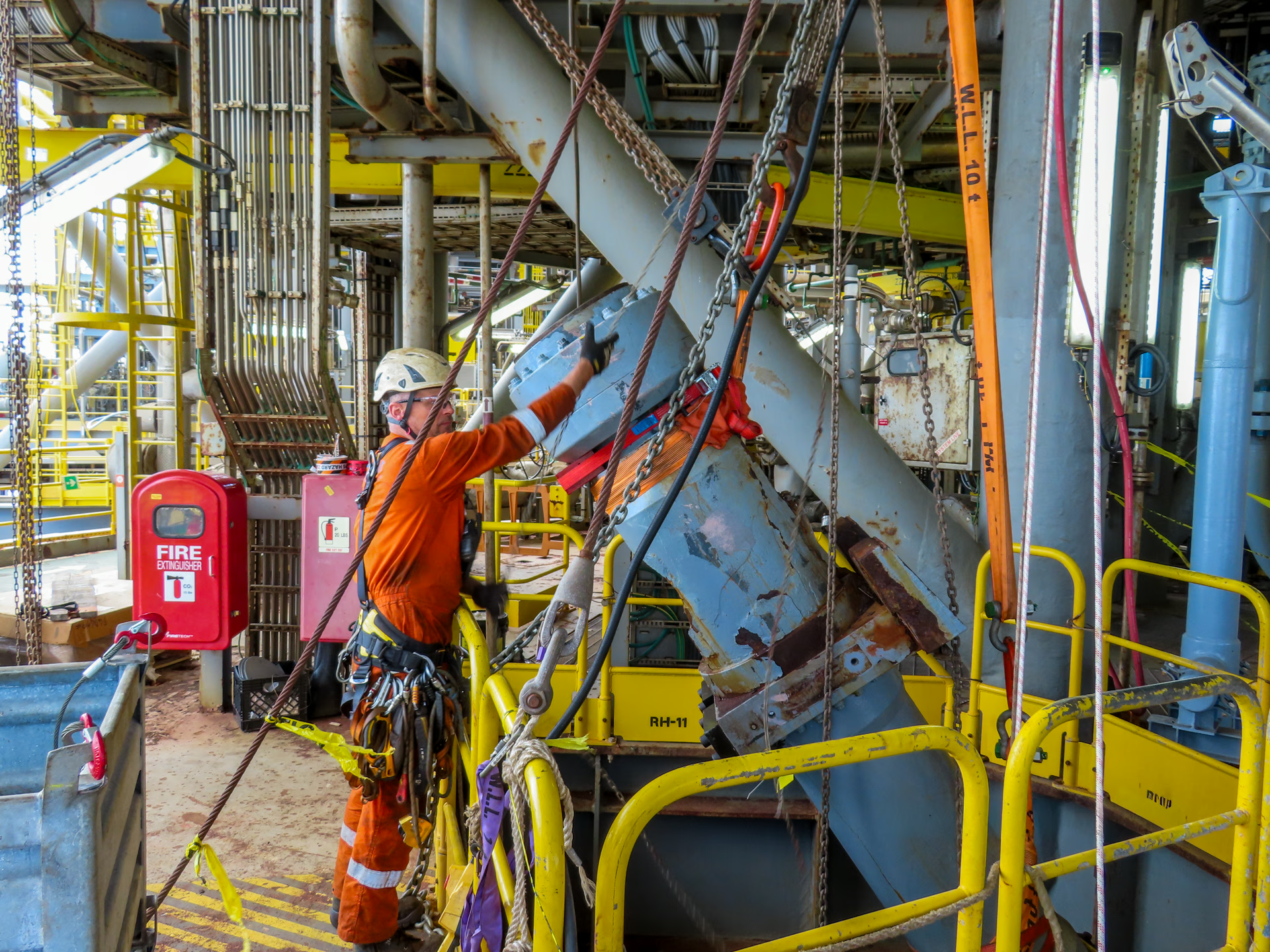
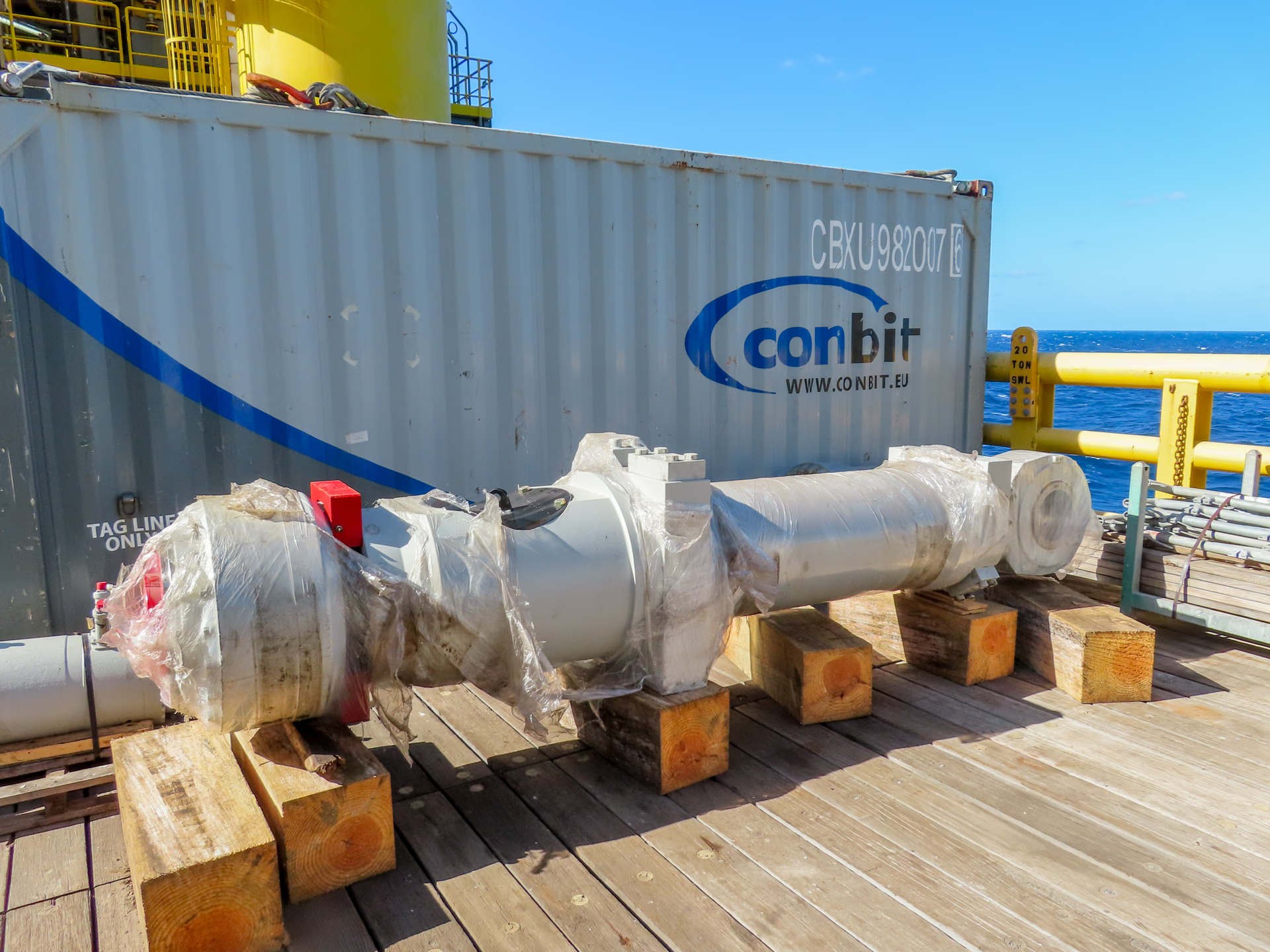
The Structural Connector 7 (SC7) Main Jack Replacement Project involved the removal and replacement of a large hydraulic main jack assembly located deep within the turret buoy of Shell's Stones Turritella FPSO. Weighing approximately eight tonnes and measuring five metres in length, the jack was positioned three levels below the main deck in a highly congested area accessible only through a lifting hatch.
Conbit was contracted to provide all lifting and handling support for the operation, working closely with hydraulic specialist Hydradyne, who was responsible for decommissioning and recommissioning the jack. Together, the teams successfully removed the existing jack and installed a replacement while maintaining safe operations throughout the project.
Engineering a Safe Solution
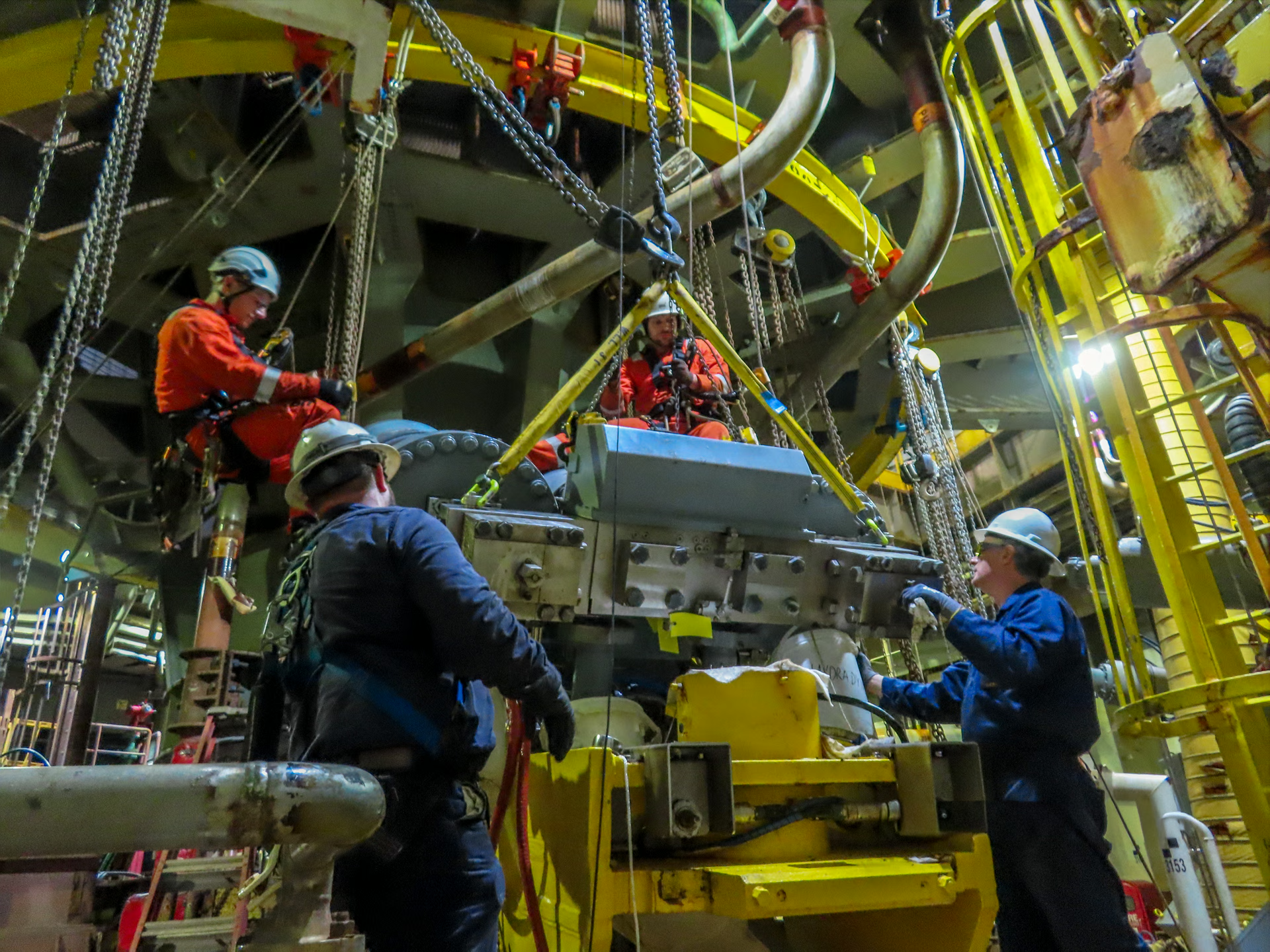
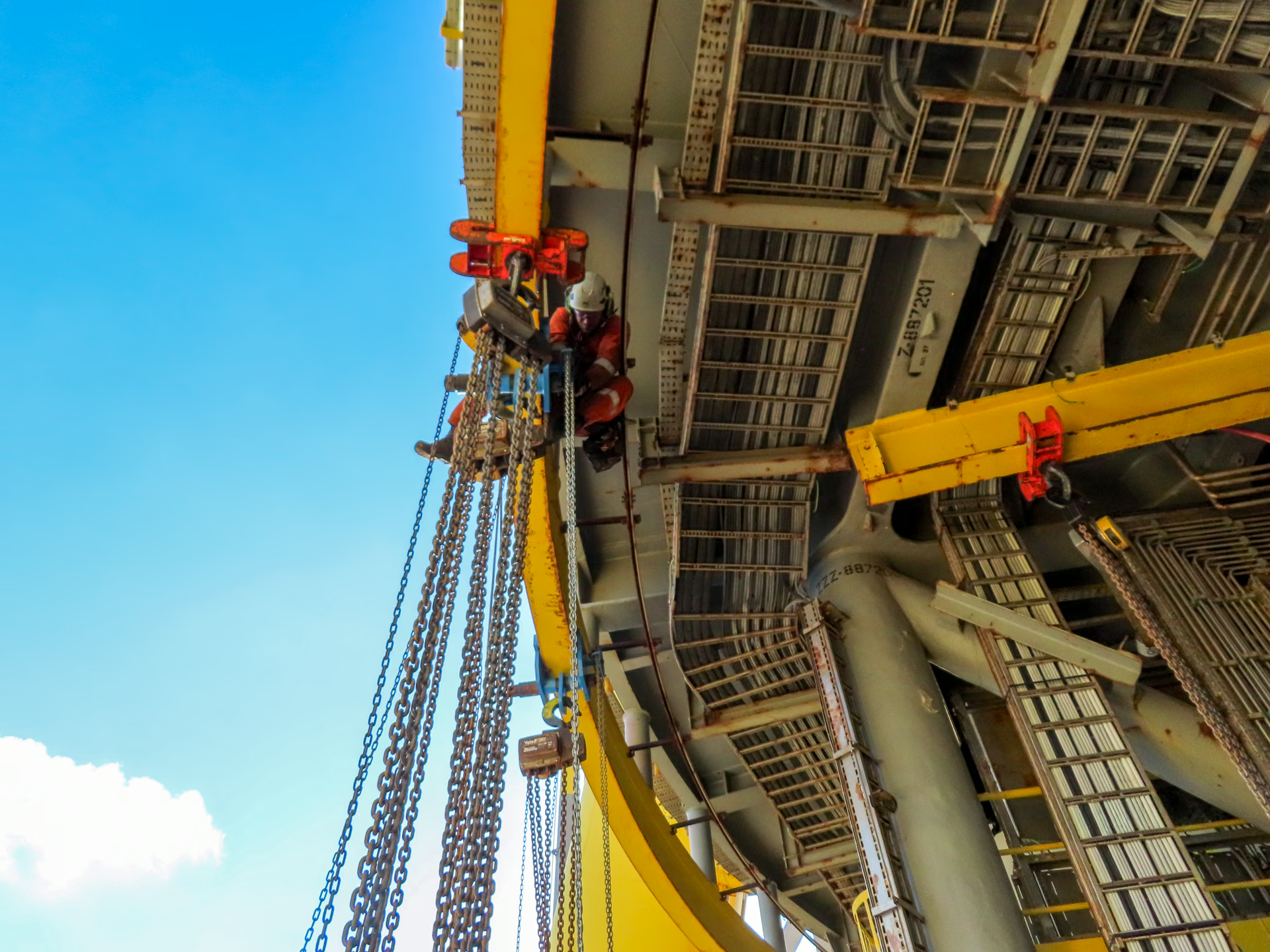
The confined workspace and limited access presented significant challenges. To safely remove and transport the jack, Conbit developed a lifting strategy using multiple rigging lines, chain hoists, beam trolleys, air hoists, and rope access techniques. Loads were carefully cross-hauled through the turret structure and transferred to the reach of the deck crane via a predefined lifting route.
Success depended on detailed lift engineering, precise positioning of lifting equipment, and close coordination between hydraulic, lifting, and rope access specialists. Clear definition of roles and responsibilities from the earliest planning stages enabled effective collaboration throughout the project lifecycle.
Weekly and bi-weekly coordination meetings, followed by daily execution briefings offshore, ensured all parties remained aligned and prepared for each stage of the operation.
Adapting Offshore
As with many complex offshore projects, field conditions evolved during execution. A well-developed lift plan combined with an effective Management of Change (MOC) process enabled the team to safely adapt to unforeseen discoveries without compromising safety or schedule.
One notable innovation was the use of a compact hydraulic power unit (HPU), which allowed controlled manipulation of the main jack during both disassembly and reinstallation. This eliminated the need for repeated lockout and re-rigging activities, significantly reducing operational complexity and saving valuable offshore time.
Results and Lessons Learned
The project was completed safely, with no loss of primary containment and no recordable injuries. Despite the complexity of this first-time operation, the work was completed ahead of schedule.
The success of the SC7 Main Jack Replacement Project demonstrates the value of strong cross-disciplinary collaboration, disciplined lift planning, and flexible execution strategies. It also confirmed the feasibility of future jack replacement campaigns on the FPSO's remaining identical hydraulic cylinders.
During his presentation, Clay will discuss the key technical, operational, and organisational lessons learned from the project and how these insights can be applied to future offshore heavy lifting and hoisting operations.
We invite you to explore the project and join the discussion on how innovative lifting solutions continue to improve safety and efficiency in the offshore industry.
How we work

No items found.
Thank you! Your submission has been received!
Oops! Something went wrong while submitting the form.
.png)
.png)
-1.avif)
Contact
We're here to answer your questions
Do you have any technical questions, general enquiries or do you need additional information? Don’t hesitate to contact our experts. With their expertise and experience in lifting services, they will gladly help you.
You can contact us by phone or email. We’re looking forward to your questions!
You can contact us by phone or email. We’re looking forward to your questions!

