
You will receive the whitepaper within 10 minutes in your mailbox.
While waiting...
We invite you to visit our YouTube channel here.
Didn't receive anything?
Please send us an email and one of our team members will send it through to you.
Oops! Something went wrong while submitting the form.
Inspections
Maintenance
Service - Preparing for Crane Services at Port (checklist)
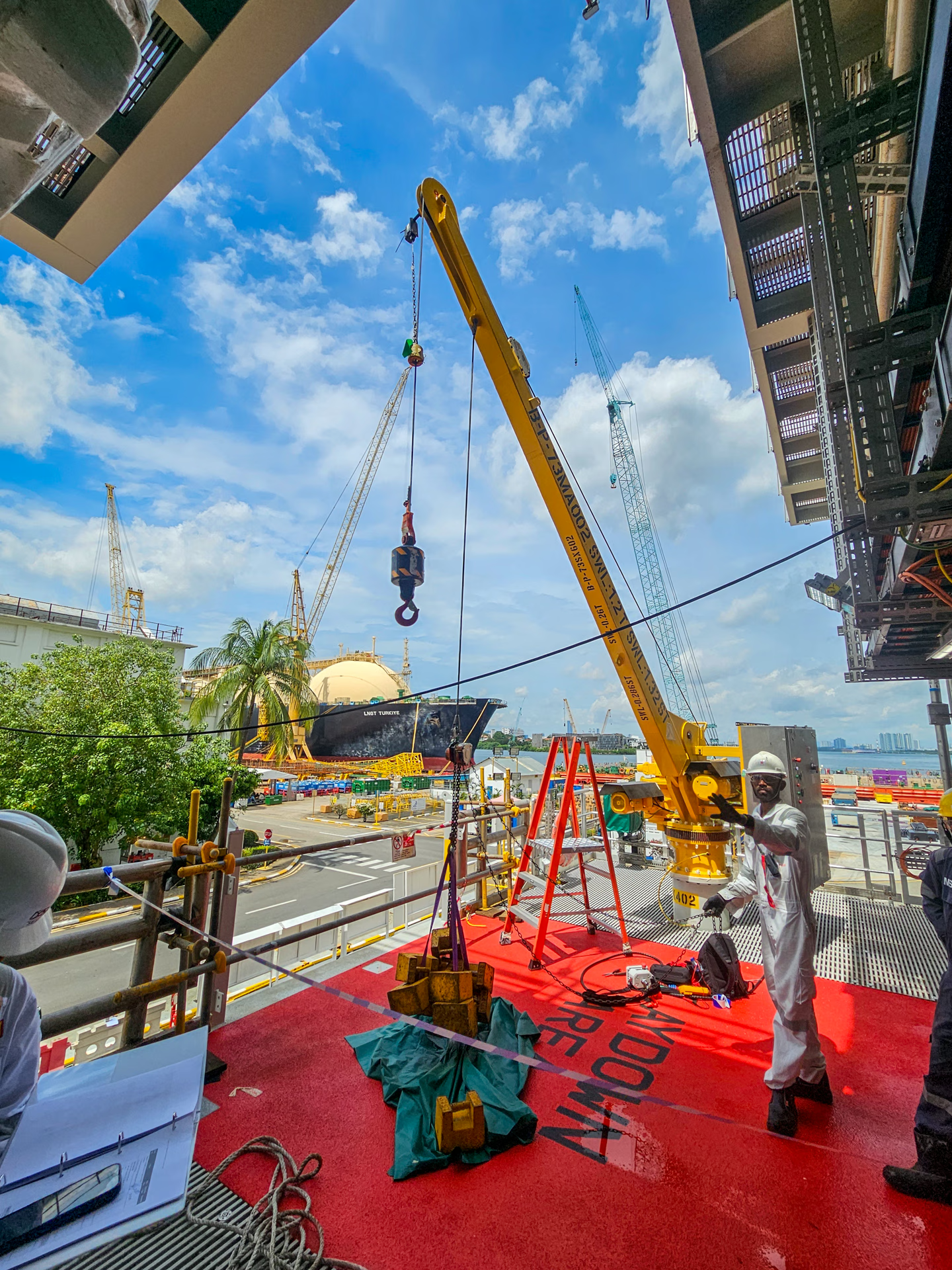
Prepare Your Port Crane for Fast, Compliant Service
A smooth crane service visit starts with good preparation. Conbit’s port crane inspection checklist helps teams verify documentation, access, isolation, and safety controls in advance, reducing delays and rework. Use our visual guide to align your operations, contractors, and HSE before technicians arrive—so critical inspections and repairs happen on time and with minimal disruption.
What to prepare before the service team arrives
Technical description: The checklist consolidates essential pre-service requirements—documentation, site access, isolation, tooling, and safety controls—to ensure technicians can execute inspections and repairs efficiently. It standardizes readiness steps across different crane types (STS, RTG, MHC) and port layouts.
Step-by-step procedure:
1) Documentation: latest inspection records, OEM manuals, maintenance logs, permits-to-work.
2) Access & logistics: clear routes, laydown areas, lifting plans for tooling, gate passes.
3) Isolation: electrical LOTO, hydraulic depressurization, mechanical locking, signage.
4) Safety: barricades, rescue plan, fall protection, gas testing (if applicable), comms.
5) Crane configuration: boom/jib position, trolley parking, rope/reeving condition check.
6) Tooling & spares: availability of calibrated instruments, rigging, consumables, spare parts.
7) Reporting: define required deliverables (findings, photos, corrective actions, sign-off).
Conbit can assist: We provide pre-visit coordination, checklists, and on-site execution, integrating with port HSE and client workflows to keep operations moving.
Temporary lifting systems (if needed): When a quay crane is constrained, Conbit can deploy modular lifting systems or rental knuckle boom cranes for auxiliary lifts and tooling handling.
Ready to proceed? Share crane details—type (STS/RTG/MHC), make/model, site constraints, target service window, and required scope. Our team will send a tailored checklist and scheduling plan. You can also contact us for other crane services worldwide.
How we work
Thank you! Your submission has been received!
Oops! Something went wrong while submitting the form.
Related Cases
No items found.


.png)

Contact
We're here to answer your questions
Do you have any technical questions, general enquiries or do you need additional information? Don’t hesitate to contact our experts. With their expertise and experience in lifting services, they will gladly help you.
You can contact us by phone or email. We’re looking forward to your questions!
You can contact us by phone or email. We’re looking forward to your questions!

