
You will receive the whitepaper within 10 minutes in your mailbox.
While waiting...
We invite you to visit our YouTube channel here.
Didn't receive anything?
Please send us an email and one of our team members will send it through to you.
Oops! Something went wrong while submitting the form.
Inspections
Maintenance
Service - Engineering Excellence: The Science Behind Crane Load Testing
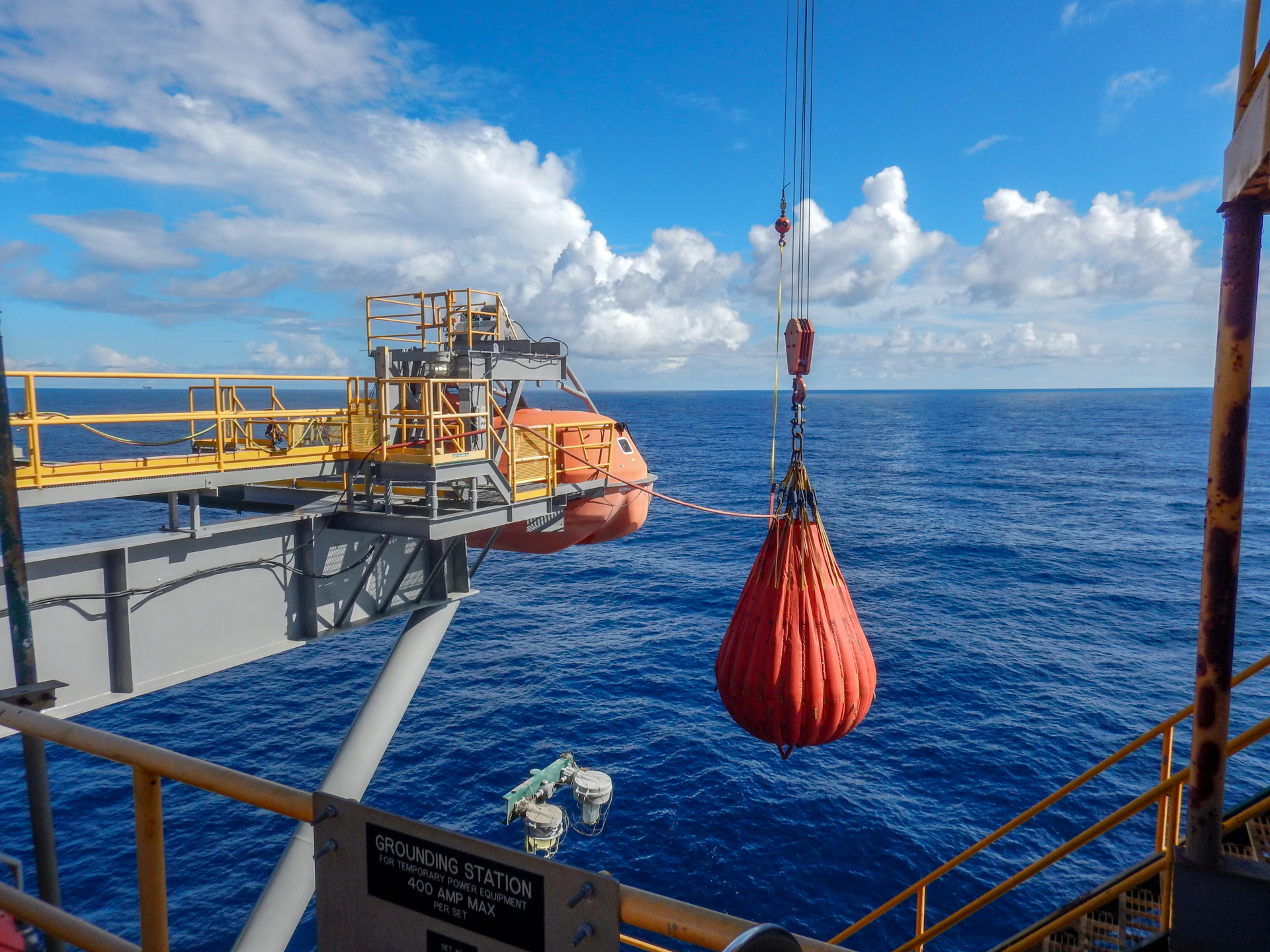
The Science Behind Offshore Crane Load Testing
Load testing is more than applying weight—it’s a precise engineering process. Conbit explains the science and calculations that ensure safe and compliant crane operations.

Engineering Principles
o Structural analysis and stress calculations.
o Hydraulic and mechanical performance checks.
o Compliance with international standards.
Technical description: Offshore crane load testing is a highly engineered process that validates structural integrity and operational safety. Structural analysis ensures that booms, jibs, and supporting frames can withstand rated loads without excessive deflection or fatigue. Stress calculations confirm safety factors under dynamic conditions, while hydraulic and mechanical checks verify winch performance, braking capacity, and control system reliability. Compliance with international standards such as API 2C, API 2D, and ISO 19901 guarantees that testing meets regulatory and class requirements.
Conbit can assist: We deliver turnkey engineered load testing solutions worldwide. Our team prepares detailed lift plans, risk assessments, and instrumentation setups, including load cells, inclinometers, and pressure sensors for accurate data capture. We manage FAT/HAT, offshore execution, and certification, ensuring full traceability and audit readiness. Conbit also provides digital reporting tools for transparent documentation and integrates testing with preventive maintenance programs to optimize asset reliability.
Next steps: Share your crane specifications, operational constraints, and compliance objectives. Conbit will design a tailored load testing plan with timelines, KPIs, and cost estimates. Contact us today to ensure your offshore lifting operations meet the highest standards of safety and performance.
How we work
Thank you! Your submission has been received!
Oops! Something went wrong while submitting the form.
Related Cases
No items found.

.png)

Contact
We're here to answer your questions
Do you have any technical questions, general enquiries or do you need additional information? Don’t hesitate to contact our experts. With their expertise and experience in lifting services, they will gladly help you.
You can contact us by phone or email. We’re looking forward to your questions!
You can contact us by phone or email. We’re looking forward to your questions!
.avif)
