
You will receive the whitepaper within 10 minutes in your mailbox.
While waiting...
We invite you to visit our YouTube channel here.
Didn't receive anything?
Please send us an email and one of our team members will send it through to you.
Oops! Something went wrong while submitting the form.
Installation
Service - Cable Bend Restrictors on offshore substations
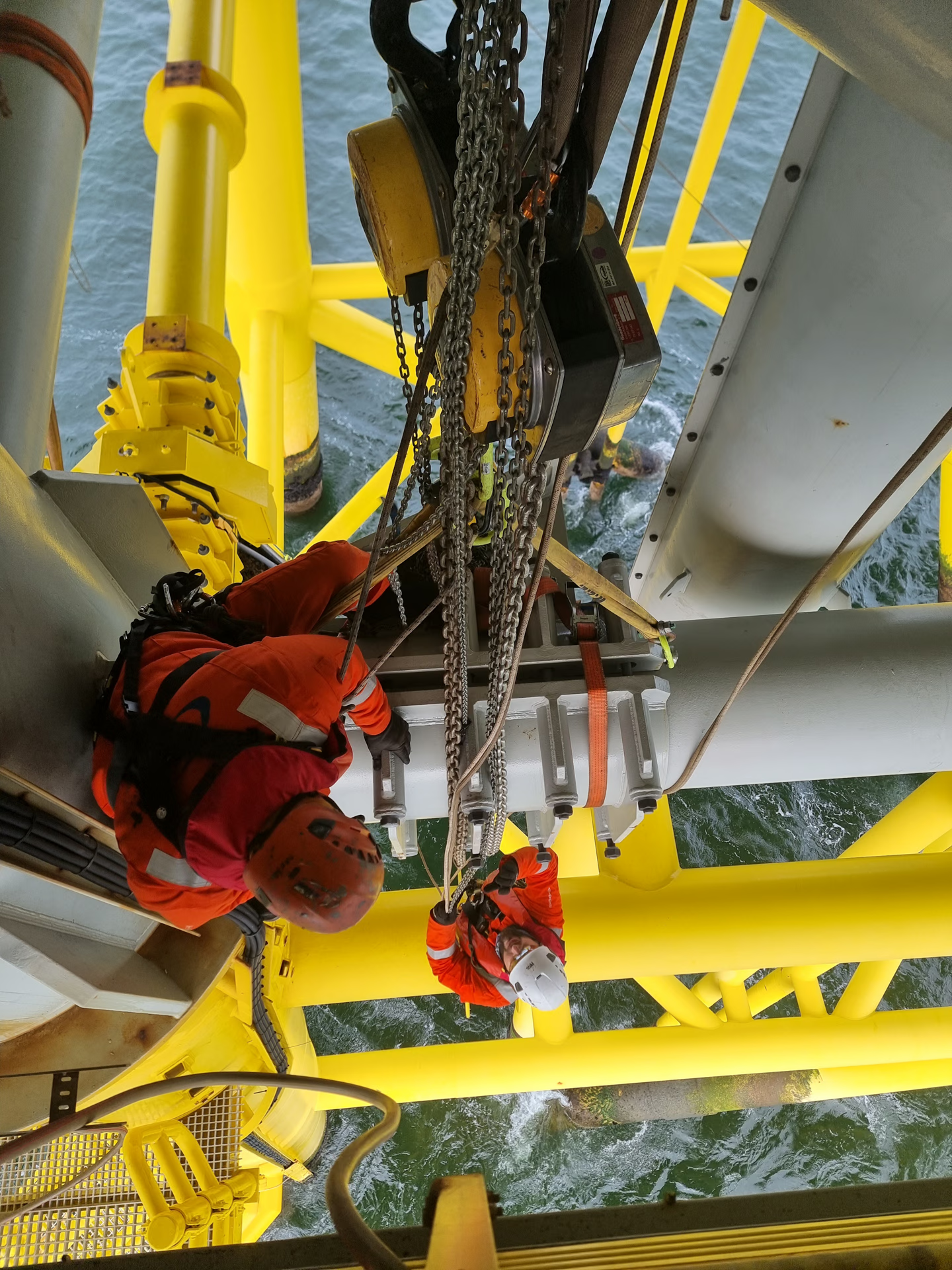
Prevent Cable Damage with Bend Restrictors
Subsea cables face extreme stresses during installation and operation. Conbit’s bend restrictors prevent over-bending at cable terminations, reducing fatigue and failure risk. Our solutions are engineered for offshore conditions and tailored to your cable specifications.
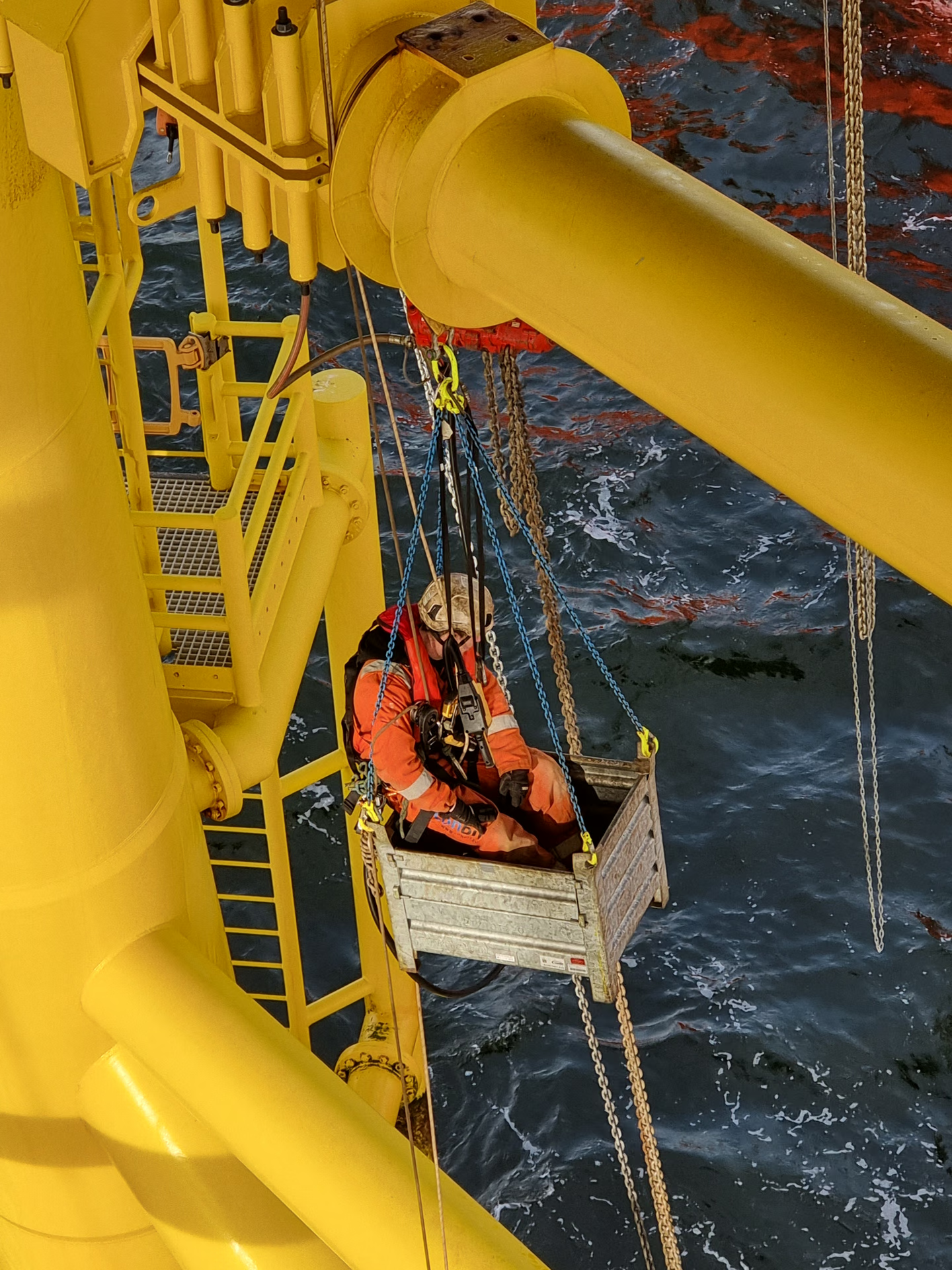
How Bend Restrictors Work
Technical description: Bend restrictors are segmented polymer or composite structures designed to prevent excessive bending at critical cable points, such as J-tube exits or hang-off locations. By controlling the minimum bend radius, they protect cable integrity during installation and throughout its operational life. These restrictors absorb mechanical loads and distribute stress evenly, reducing fatigue and preventing premature failure caused by dynamic motions, wave-induced movements, or handling during subsea deployment.
Step-by-step procedure:
1) Cable data review and restrictor design based on diameter, stiffness, and environmental conditions.
2) Manufacturing and quality checks, including material certification and dimensional verification.
3) Offshore installation during cable lay or maintenance, ensuring correct alignment and secure fastening.
4) Final inspection and documentation with photographic evidence and torque verification.
Conbit can assist: We supply and install bend restrictors globally, ensuring compatibility with your cable system and project requirements. Our engineers provide design calculations, installation procedures, and risk assessments to guarantee safe and efficient deployment. We also integrate bend restrictors with other protection measures such as sleeves, bend stiffeners, and burial strategies for comprehensive cable safeguarding. Digital reporting tools ensure full traceability and compliance with industry standards.
Ready to proceed? Share cable specifications, project location, and installation schedule. Conbit will prepare a tailored solution with method statements, equipment lists, and timelines. Contact us today for expert support on bend restrictors and other subsea cable protection solutions.
How we work
Thank you! Your submission has been received!
Oops! Something went wrong while submitting the form.
Related Cases
No items found.


.png)
Contact
We're here to answer your questions
Do you have any technical questions, general enquiries or do you need additional information? Don’t hesitate to contact our experts. With their expertise and experience in lifting services, they will gladly help you.
You can contact us by phone or email. We’re looking forward to your questions!
You can contact us by phone or email. We’re looking forward to your questions!

